How long should a dog leash be?
The ideal leash length depends on where and how you plan to walk your dog. For everyday walks in urban or busy areas, a leash between 1,2 to 1,8 meters is usually best for control and safety. For walks in nature or less crowded areas, a longer leash works well, giving your dog more freedom to explore while still keeping them secure.
How do I know which leash is right for my dog?
Choosing a leash relies on several factors, such as where you plan to walk the dog and your dog’s training. Generally, you want a leash that is comfortable for you to hold as well.
- Hands free leashes are good for short walks, outings where you may carry things, and activities like hiking if your dog knows not to pull.
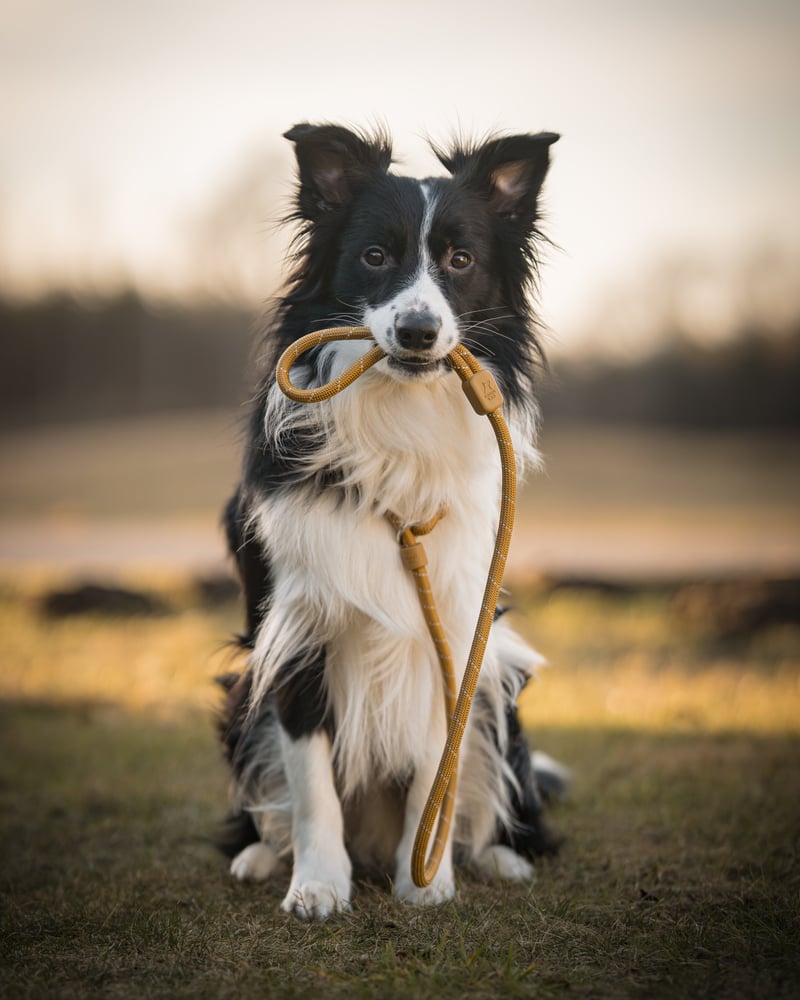
- Rope leashes are generally durable, lightweight, and comfortable to hold for extended walks. Our rope leashes come in two thicknesses: thin (8mm), which we recommend for small dogs and puppies, and standard (10mm) for everyone else. We also offer a 6m long rope leash for those needing extra length.
- Retriever leashes (also known as slip leads) combine a collar and leash into one, making them easy to put on and take off—ideal for training, agility, or quick transitions.
- Long leashes are good for letting your dog run around while maintaining control and training for various specialty tasks.
- Flat leashes are strong and comfortable to hold in your hand thanks to the soft woven recycled polyester tubing. It's perfect when you want your dog to walk closer to you, in urban environments or when training in obedience. The dog leash packs light so it's easy to take with you wherever you go.
How do I train my dog on a leash?
Training a dog on a new leash can be challenging, and the best method will depend on the pup. This can take several sessions. Here are some tips to help you get started.
- Stop moving if your dog pulls on the lead. Do not resume moving until they stop pulling.
- Reward your dog for staying in a heel position.
- Reward your dog for coming back to you if they are out of the heel position, but not pulling.
- Add basic obedience commands like sit to your leash training session.
You can also consult a dog training specialist who can tailor the training to your pup’s needs.