¿Cuánto debe medir una correa para perro?
La longitud ideal de la correa depende de dónde y cómo planeas pasear a tu perro. Para paseos diarios en áreas urbanas o concurridas, una correa de entre 1,2 y 1,8 metrosgeneralmente es mejor para el control y la seguridad. Para paseos en la naturaleza o áreas menos concurridas, una correa más larga funciona bien, dando a tu perro más libertad para explorar mientras lo mantienes seguro.
¿Cómo sé qué correa es la adecuada para mi perro?
Choosing a leash relies on several factors, such as where you plan to walk the dog, the weather in your area, and your dog’s training. Generally, you want a leash that is comfortable for you to hold as well.
- Hands free leashes are good for short walks, outings where you may carry things, and activities like hiking if your dog knows not to pull.
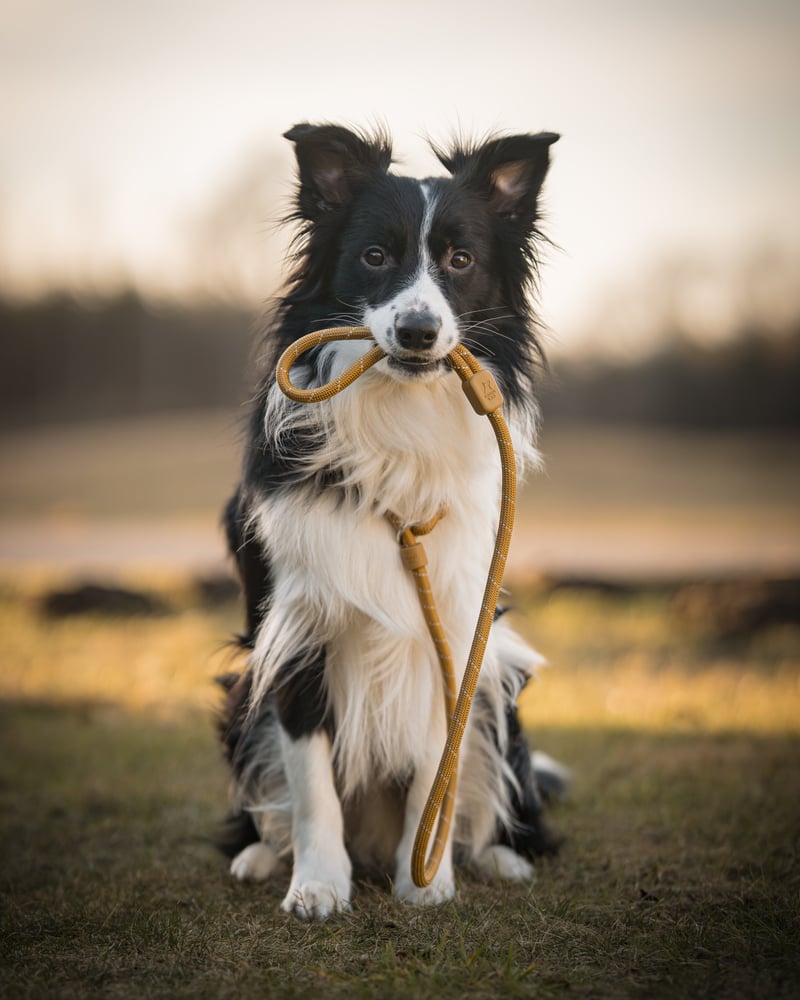
- Rope leashes are generally durable, lightweight, and comfortable to hold for extended walks. Our rope leashes come in two thicknesses: thin (8mm), which we recommend for small dogs and puppies, and standard (10mm) for everyone else. We also offer a 6m long rope leash for those needing extra length.
- Retriever leashes (also known as slip leads) combine a collar and leash into one, making them easy to put on and take off—ideal for training, agility, or quick transitions.
- Long leashes are good for letting your dog run around while maintaining control and training for various specialty tasks.
- Flat leashes are strong and comfortable to hold in your hand thanks to the soft woven recycled polyester tubing. It's perfect when you want your dog to walk closer to you, in urban environments or when training in obedience. The dog leash packs light so it's easy to take with you wherever you go.
¿Cómo entreno a mi perro con correa?
Entrenar a un perro con una nueva correa puede ser un desafío, y el mejor método dependerá del cachorro. Esto puede llevar varias sesiones. Aquí hay algunos consejos para ayudarte a comenzar.
- Deja de moverte si tu perro tira de la correa. No reanudes el movimiento hasta que deje de tirar.
- Recompensa a tu perro por mantenerse en posición de talón.
- Recompensa a tu perro por volver a ti si está fuera de la posición de talón, pero no tirando.
- Agrega comandos básicos de obediencia como "sentado" a tu sesión de entrenamiento con correa.
También puedes consultar a un especialista en adiestramiento de perros que pueda adaptar el entrenamiento a las necesidades de tu cachorro.